
Finasteride Hair Loss Treatment
The most-studied DHT blocker for male pattern hair loss. One tablet a day, prescribed online, shipped to your door.
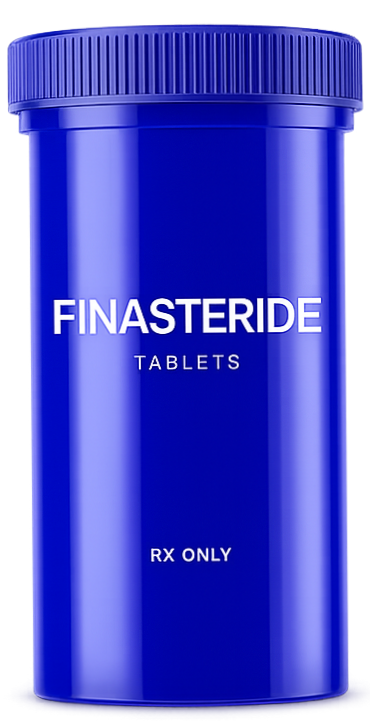
What is finasteride, and how does it work?
Finasteride is an oral, FDA-approved medication for male pattern hair loss (androgenetic alopecia). It works by inhibiting 5-alpha reductase, the enzyme that converts testosterone into DHT (dihydrotestosterone) — the hormone primarily responsible for shrinking hair follicles over time.
Unlike topical treatments that work on the scalp’s surface, finasteride works systemically, lowering DHT levels throughout the body. That’s why it addresses hair loss at the hormonal source rather than just supporting the follicle from outside.
It’s typically taken as a 1mg tablet once daily, and consistency matters — most men who see results are on a long-term routine, not a short course.
What to expect, timeline-wise
Results vary by individual, and finasteride works best on active hair loss — it’s more effective at preserving existing hair than regrowing hair in areas that have been bald for years. If you’re comparing formats, see our full breakdown of hair loss treatment types.
Finasteride vs. minoxidil hair loss treatment
These are the two most common hair loss treatments, and they work in completely different ways — which is why many routines use both together rather than choosing one over the other. Minoxidil is also available as an over-the-counter treatment, unlike finasteride.
| Factor | Finasteride | Minoxidil |
|---|---|---|
| Form | Oral tablet | Topical foam/liquid, or oral off-label |
| Mechanism | Blocks DHT production | Improves blood flow to follicle |
| Prescription needed | Yes | No (topical); yes (oral) |
| Best for | Male pattern hair loss specifically | Any pattern of hair loss, men or women |
| Used together | Commonly combined for a more complete routine | |
Who should (and shouldn’t) use finasteride
Finasteride is prescribed for adult men with male pattern hair loss. Like any prescription medication, it isn’t right for everyone, and side effects — though uncommon — are possible.
Important safety note
Finasteride is not intended for use by women, particularly those who are pregnant or may become pregnant, due to risk of harm to a developing male fetus. Anyone considering finasteride should discuss their full medical history with a licensed provider before starting treatment — that consult happens automatically as part of getting prescribed.
This page is for informational purposes and isn’t a substitute for medical advice. Your provider will review your history and confirm whether finasteride is appropriate for you. If you’re exploring options for female pattern hair loss instead, see our women’s hair loss treatment guide.
Ready to start?
Get matched with a licensed provider, get prescribed if appropriate, and have it shipped — no waiting room required.
Get FinasterideWant to compare brands first?
If you’re weighing finasteride against a specific branded product, our Propecia (finasteride) review breaks down cost, formula, and real user results in more detail.
Common questions
Is finasteride the best hair loss treatment?
For male pattern hair loss specifically, finasteride is one of only two FDA-approved medications (alongside minoxidil), and it’s the only oral option that addresses the hormonal cause directly. “Best” depends on your pattern of loss and whether you prefer an oral or topical routine.
How long does finasteride treatment take to work?
Most men notice shedding slow within 2-4 months, with visible thickening between months 3-6. Full results are typically assessed at the 12-month mark.
What happens if I stop taking finasteride?
Finasteride only maintains results while you’re taking it. Stopping typically leads to hair loss resuming its previous pace within 6-12 months, as DHT levels return to baseline.
Can I use a hair loss treatment without finasteride?
Yes — minoxidil, ketoconazole shampoo, low-level laser therapy, and dermarolling are all non-finasteride options. They tend to be less effective for hormone-driven hair loss but don’t require addressing the same safety considerations.
Is finasteride the same as dutasteride?
No. Both block DHT, but dutasteride blocks it more completely and is considered a stronger option, though it’s used off-label for hair loss (finasteride is FDA-approved specifically for this purpose).